Photography: Natasha Mulhall Photography
The State Library and Archives of Tasmania is strategically located in the city centre of Hobart nipaluna. It’s been home to Tasmania’s historical records since its inception, while also providing free access to education, a place to meet and welcome all members of the community so they feel they belong.
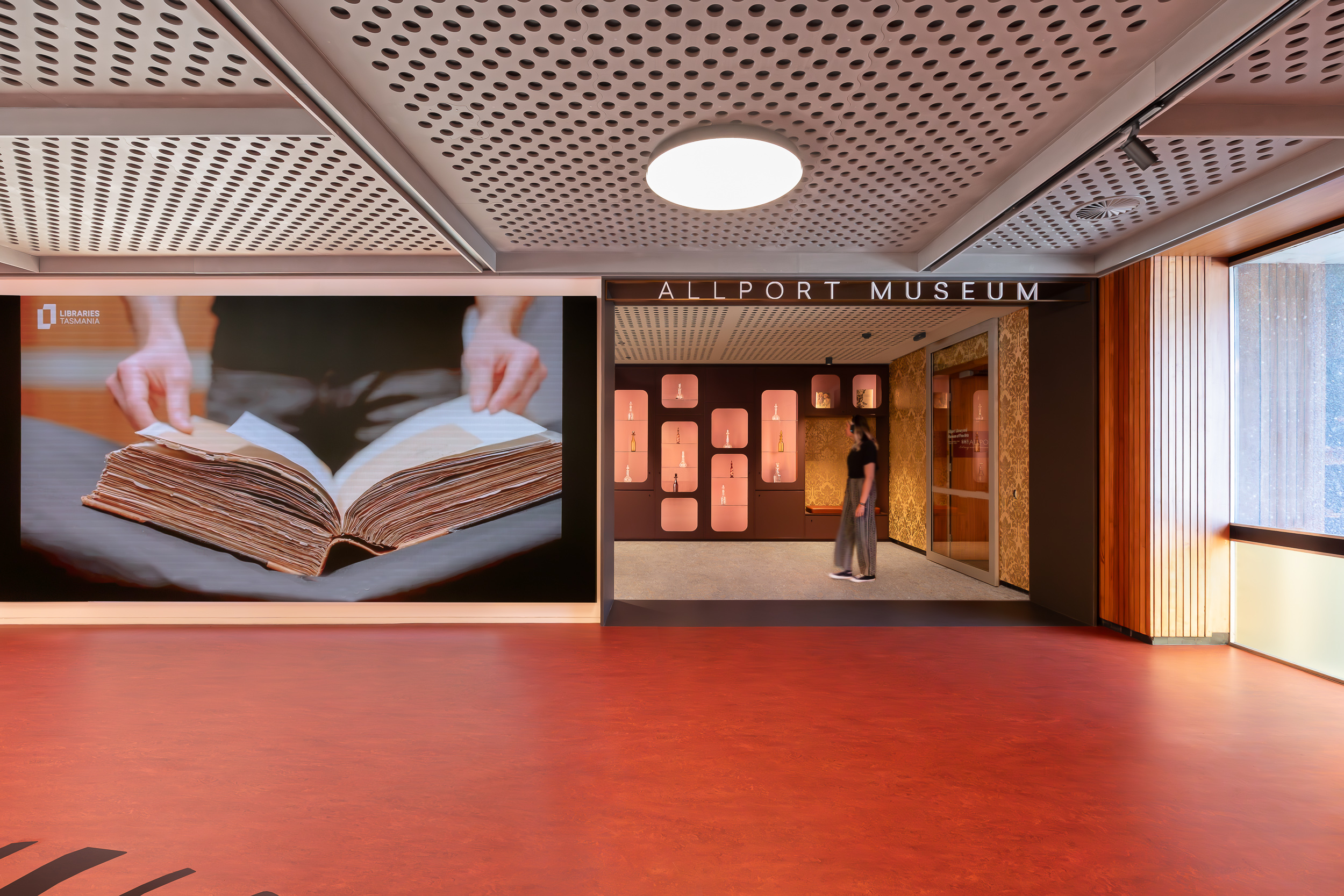
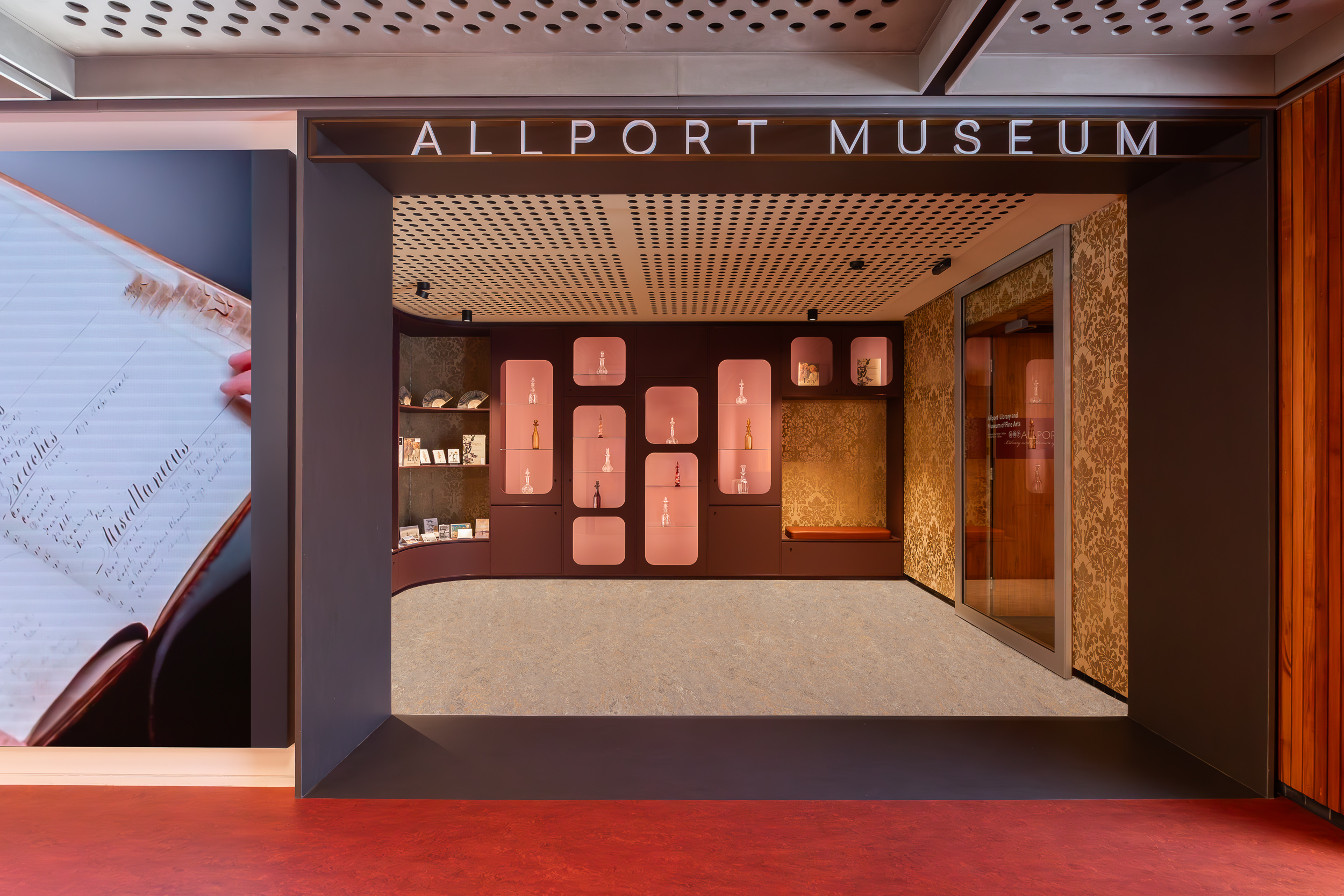
The brief called for an uplift to the ground floor foyer of the 1962 John Scarborough-designed Wray Building to strengthen community connections to the Library’s services and archive collection. It also required a more welcoming space, greater prominence for the Allport Gallery and Museum, and opportunities to support events.
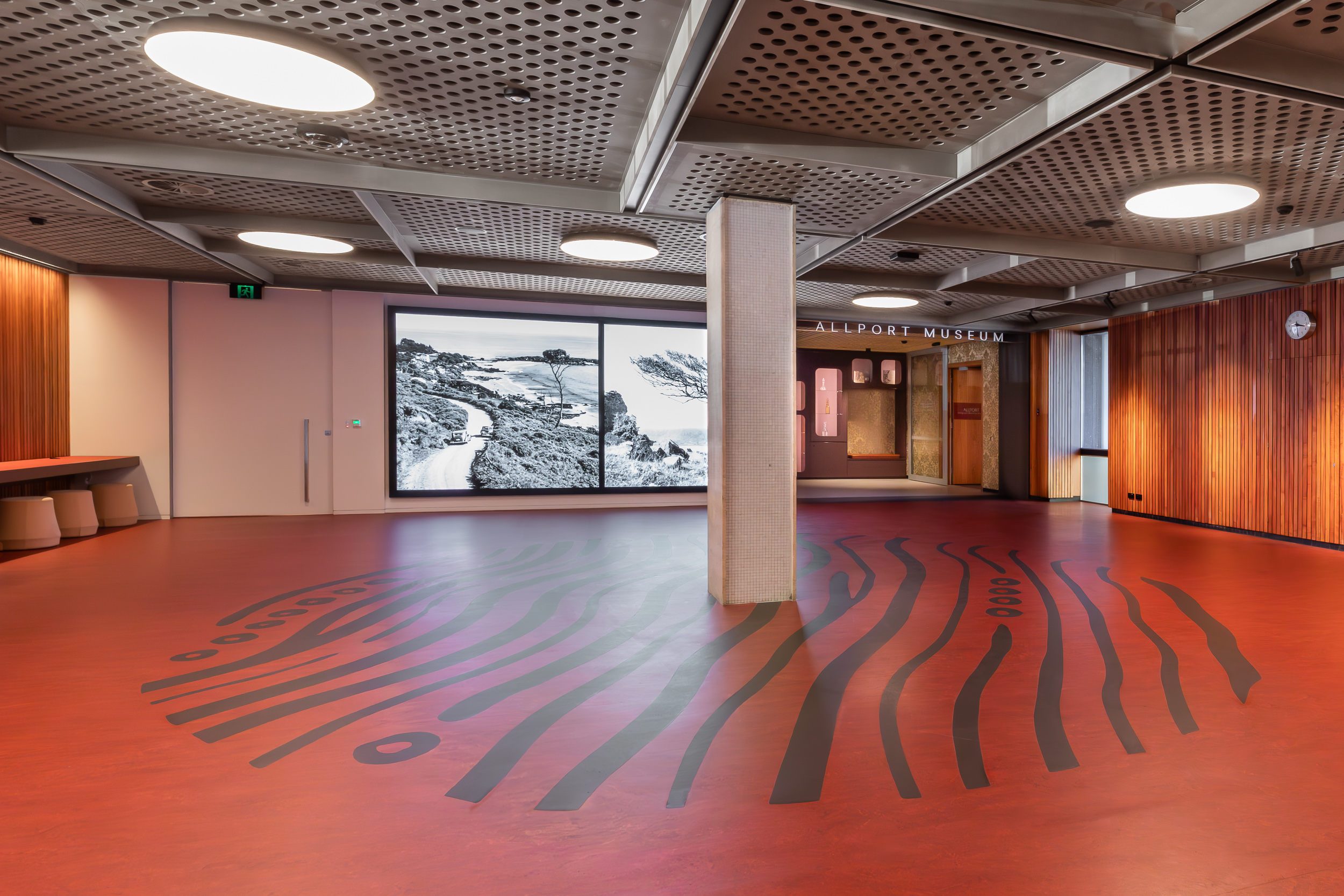
The way the artwork, Tunapri meaning knowledge, interacts with the space, offers layers of meaning depending on the visitor’s curiosity. At first glance the circular, contemporary outward-facing seating surrounding the original mosaic-tiled column, is sitting on the design embedded in the ochre-coloured linoleum finish. This suggests either cross-cultural tension or synthesis depending on perspective. The mobile concave seating offers safe yet solitary moments of pause, while engaging in dialogue with the Aboriginal notion of knowledge-sharing through an abstracted imprint of a yarning circle. The artwork symbolises the significance of circles in Aboriginal culture, and the symbolism of passing knowledge through generations through cultural activities and storytelling. Represented as an abstracted thumbprint, it reflects the unique perspectives individuals bring to knowledge and cultural learning, shaped by their personal experiences and opportunities for deeper understanding.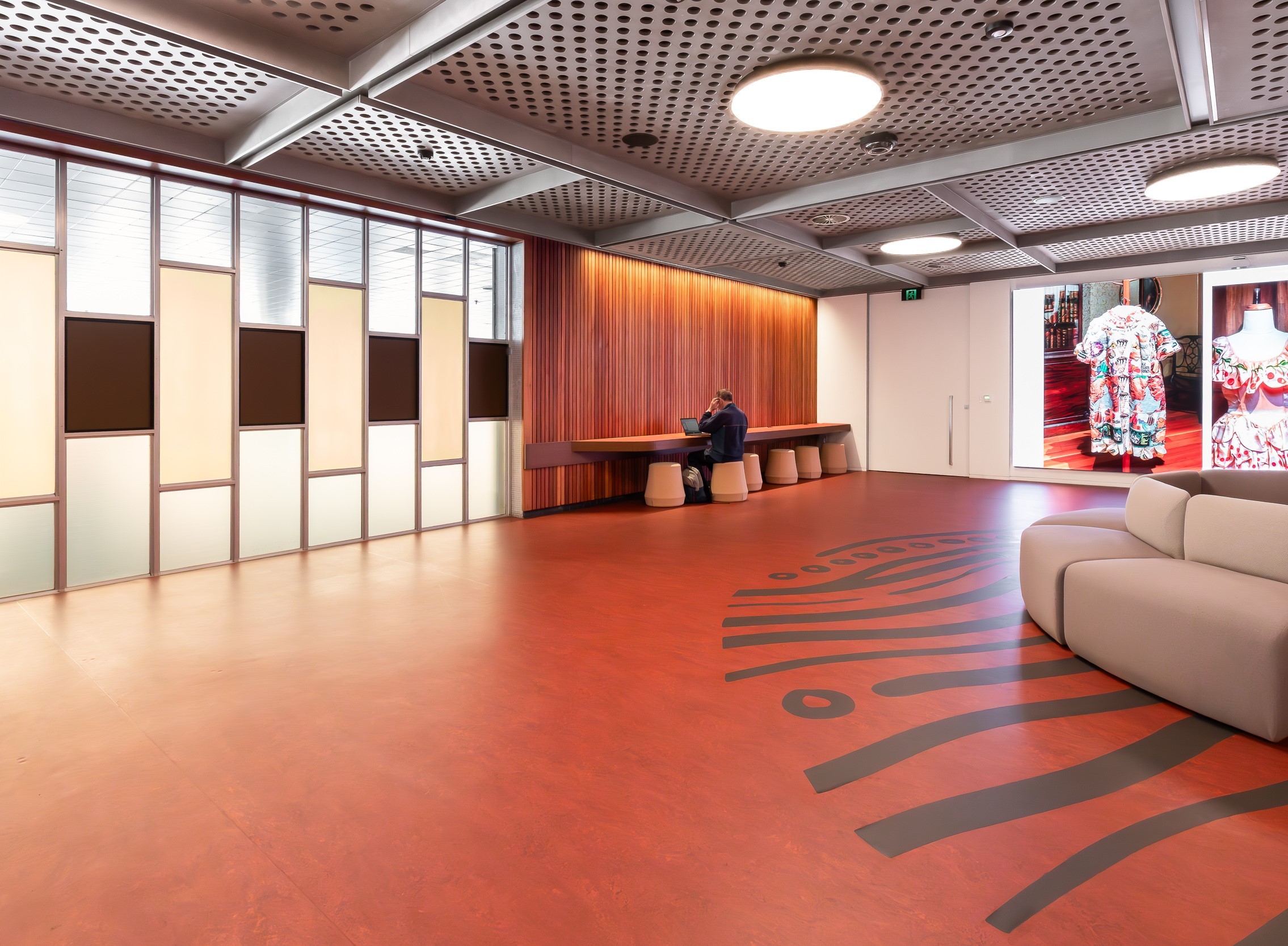
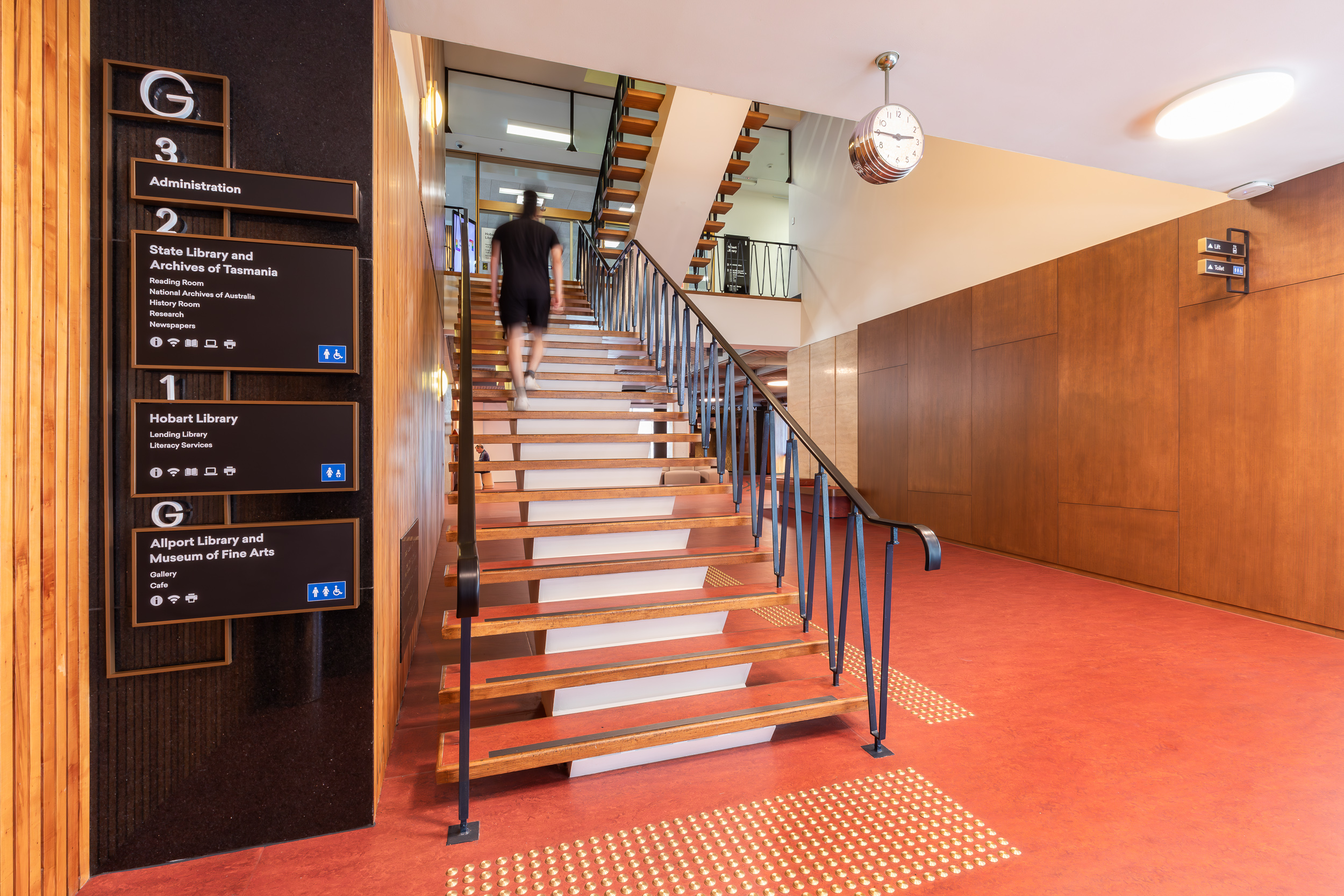
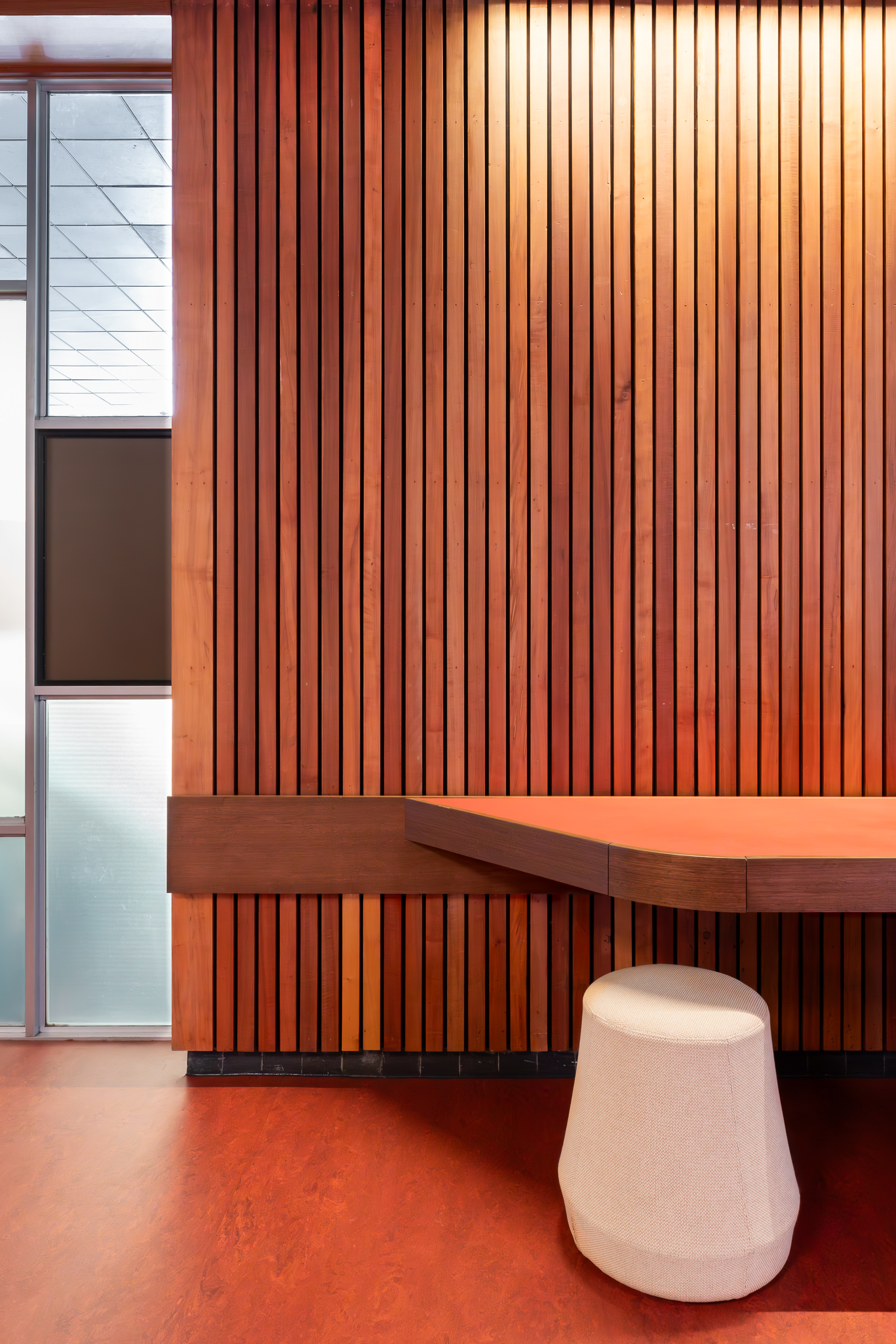
The design decluttered and removed unsympathetic 1990s additions, restoring spatial clarity and enhancing accessibility. The original features were reinstated and celebrated while creating a versatile space for gathering, learning and cultural exchange. Inspired by the Library’s original 1962 presentation, the key intervention involved reorienting the ground-to-first-floor stairway through careful dismantling, recycling, and repurposing. A split-level ground floor foyer was replaced with an expanded 1:20 ramp, ensuring universal accessibility and a seamless, cohesive flow while incorporating climatic modifications to enhance comfort and functionality.