
LIMINAL Studio | On Liminality: Threshold Thinking
Posted 24 March 2026
Reflections from our December LIMINALity workshop, where our Northern and Southern teams joined together in our Hobart Studio.
Design excellence doesn't come from relentless forward motion. It comes from knowing when to pause, when to gather, when to stand at the threshold and look both ways.
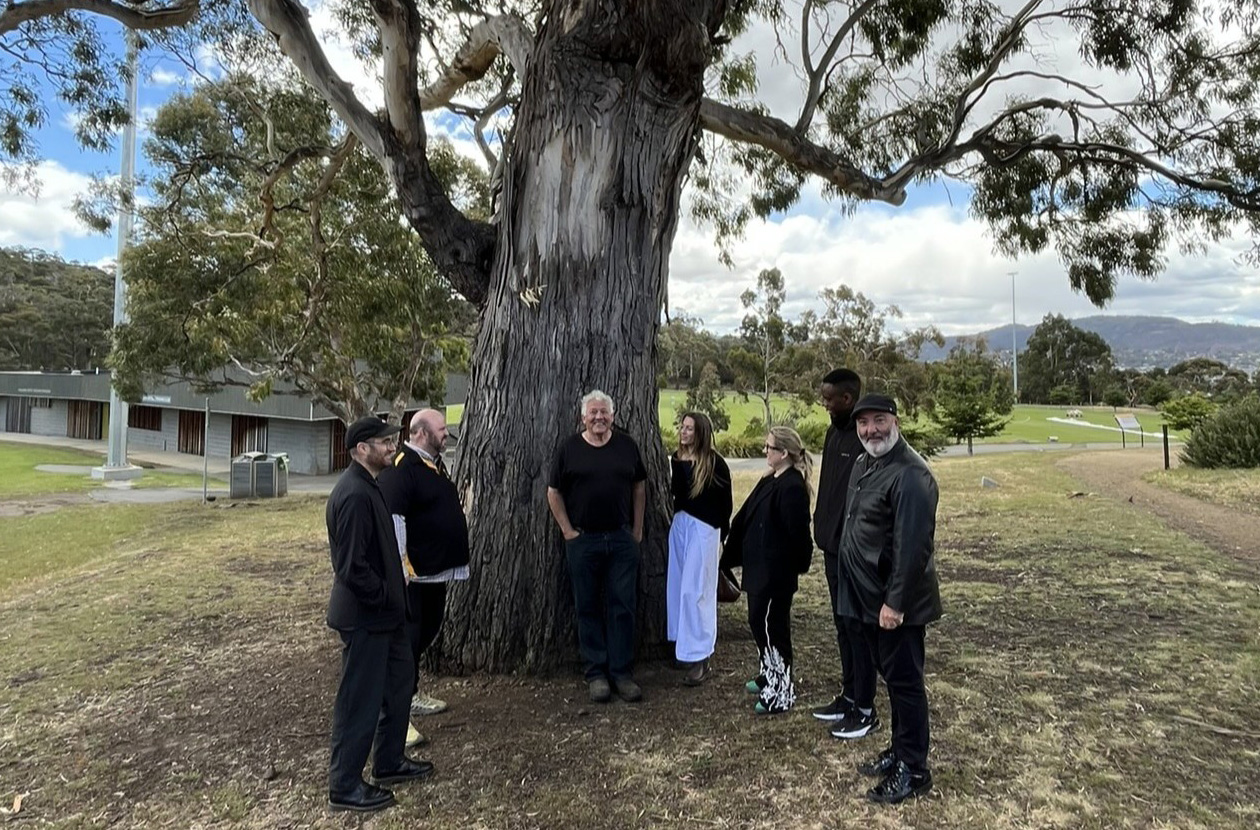
Uncle Rodney shares insights with the LIMINAL team. Image: Peta Heffernan.
On LIMINALity: Why studios need space to stand still.
In December, LIMINAL Studio did something counterintuitive. We paused.
Our teams from nipaluna (Hobart) and naarm (Melbourne) gathered not to design a building, but to design ourselves: to map where we've been and chart where we're going. We called it LIMINALity, because threshold work demands threshold thinking.
Creative disciplines often embody momentum: the next project, the next competition, the next deadline. But transformation doesn't happen in motion. It happens in the in-between. In the liminal.
We are continually working to embed this philosophy in our projects: creating spaces that honour transition, that acknowledge the wisdom of First Nations peoples for whom nothing stands in isolation, who understand the built fabric as part of living ecosystems rather than static objects.
Practices are also living systems. As we learn from Aboriginal knowledges and ways of being, when you look behind you, you see the future in your footprints, we need to look at our own impact - our journey as a transdisciplinary studio operating between architecture, spaces, objects, ideation, and Country, to understand our place within this vast, alive ecosystem.
Our workshop wasn't about strategic planning in the traditional sense. It was about collective sense-making. What does it mean to be a studio committed to regenerative design, co-design with First Nations voices, and carbon neutrality? How do we live our values, not just design them?
Some outcomes were expected: renewed clarity, stronger connection between our 'north' and 'south' studios. Others surprised us: new ways of articulating our collaborative methodology, deeper understanding of what "threshold thinking" means in practice.
Design excellence doesn't come from relentless forward motion. It comes from knowing when to pause, when to gather, when to stand at the threshold and look both ways.
What would your practice look like if you gave it space to be liminal?

Our LIMINAL team during our LIMINALity workshop. Image Peta Heffernan


